

Many product development trajectories experience delays because disciplines only start communicating with each other at a late stage. The hardware works, but does not fit the design. The software does what it needs to do, but the controls do not feel intuitive. Or technical limitations arise that could have been prevented earlier.
At Beeliners, we work differently. Various areas of expertise are involved with a single product from the very beginning, so that these kinds of problems are prevented. In this blog you will read how our approach works and why we believe this is the fastest way to arrive at a high-quality end product.
In this blog:
- Our team: different disciplines, one goal
- How we collaborate
- Faster towards a product that truly works
Our team: different disciplines, one goal
A product that truly works requires more than one type of expertise. That is why our team consists of specialists with diverse backgrounds who continuously collaborate on the same project. Think for example of an industrial designer, a software developer and an electrical engineer. This can look as follows:
- Alignment on the product with all specialists: What functionalities does the product need to have? In addition, the technical possibilities are discussed as well as what experts need from one another.
- The industrial designer & electrical engineer: Alignment on the physical controls of the product and the smart placement of internal components.
- The industrial designer & software developer: Alignment on the User Interface (UI) and the visual controls for the end user.
- The electrical engineer & software developer: Collaborating on the actual control of the electronics and a seamless interaction of all components.
Thanks to this multidisciplinary way of working, we discover at an early stage whether ideas are technically feasible, whether components are compatible with each other and whether solutions actually do what they are supposed to do.
How we collaborate
Multidisciplinary working forms the foundation of product development at our company. We ensure that different disciplines are continuously in contact with each other and provide one another with feedback. In practice, this looks as follows:
- From a project management perspective, we hold stand-up meetings that take place one to three times per week. In these brief consultations, everyone shares what they have been working on and what the next steps are. Based on this, it can be determined immediately whether disciplines need to come together to work something out.
- In addition, we regularly schedule moments to review each other’s work, consult with one another or to share knowledge. This way, all specialists involved stay informed of the project’s progress.
- Furthermore, we keep internal lines of communication short, allowing decisions to be made quickly and changes to be implemented to resolve any issues.
- Finally, we enjoy working closely with our clients and schedule a meeting every two weeks. This allows us to directly apply their knowledge, make decisions faster for further development and better respond to their needs..
Practical examples
In practice, the multidisciplinary collaboration at our company looks as follows:
- At the start of a project, all specialists come together to discuss at a technical level what the possibilities are, where the showstoppers are and where the focus should lie. In addition, alignment takes place on what specialists need from each other in order to move forward.
- During the creation of UI prototypes, an industrial designer and software developer work together to properly align user actions and product feedback.
- When designing a circuit board, the electrical engineer and industrial designer collaborate to ensure that buttons, mountings and components are in the right place.
- When software is being developed, the software developer and electrical engineer work together on the electronics to ensure that functionalities are controlled in the correct way.
The result: a product in which design, functionality and technology are aligned from the very beginning.
Faster towards a product that truly works
The traditional way of working in product development is that a specialist develops a component and then hands it over to the next person. This leads to poor alignment, the passing on of problems and unnecessary redesigns.
Because our disciplines are continuously in contact with each other, we prevent this. Design, functionality and technical requirements come together at an early stage, meaning decisions are better substantiated and an idea quickly becomes visible and tangible for the client. In addition, showstoppers surface more quickly and are resolved immediately. This allows us to focus on developing a product that truly works. In practice, we see that this leads to faster turnaround times, higher product quality and in many cases lower development costs.
Curious about what the complete trajectory looks like? Feel free to contact us and we’ll be happy to look at your specific situation and give answers to what it’ll look like for your organization.
Also interesting
-
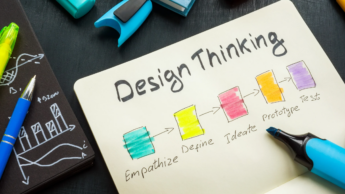
Design Thinking in complex organizations: how to get every department on board
There’s a problem that needs a fast solution. A new system, an extra feature, or an entirely new product. Many organizations jump straight into solution mode and start building right away. The result is that a lot of time and budget goes into something that doesn’t actually solve the… Read More
-

Product innovation vs. product optimization: when should you invest in innovation?
Anyone managing a mature product portfolio regularly faces the same choice: do we keep improving the current product step by step, or invest in an entirely new one? For SMEs and multinationals, this is a key portfolio question. Do you develop an existing platform further to maintain short-term… Read More
-

Proof of Concept (PoC): what is it and why do you need it?
You have a strong idea for a new product. It feels logical, it sounds promising and you can envision clearly what it could mean to your customers. But an idea only becomes valuable when it truly works in practice and when you can convince others that it’s a good… Read More