


Introducing your new product to the market
Your idea has been developed into a final product that you are proud of. Now comes the most exciting, and perhaps the most enjoyable, part of product development: the product introduction.
The product introduction is the step you take after creating, testing, and validating your product. You are now ready to actually bring the product to market. Together, we ensure that the product introduction is successful. This is accomplished through a product introduction plan.

- We collaborate with you
We don’t work for you, but with you. That you way you will stay involved and can keep control over your idea. - Specialist at the ready
You will have direct contact with the specialists who work on realizing your idea. Spar directly with the right specialist. - Direct lines
Would you like adjustments to your idea? Due to the direct line of communication we can act quickly to make it happen. - The IP remains yours
The Intellectual Property (IP) is always yours. We are happy to help you take care of the paperwork.

What is product introduction?
A product introduction is the process by which a new product actually enters the market and becomes available for sale. During this process, all the preparations made during the development phase are put into practice. A successful product introduction involves not only making your new product available, but also creating awareness and interest among the target audience.
The importance of a strategic product introduction
A product introduction is a critical step for the success of your new product. It generates demand by positioning the product as a solution to a specific problem that the target audience encounters. Additionally, it helps build a strong brand identity and provides valuable customer feedback.
This feedback can be used to further optimize your new product. A product introduction makes it possible to differentiate your product in a competitive market, increases your market penetration, and lays the foundation for long-term success.

“Together we make your idea reality.”
Do you have a product idea that you want to bring to life? Our experts are ready to develop your product and bring it to the shelves. An initial consultation is always free. Get started today!

The 11 elements of a successful
product introduction
When your new product is ready to be introduced to the market, you naturally want it to be a success. You can ensure this through the following:
1. Certifying the product: Before you are permitted to sell your product, it must be certified. For example, it may need a CE mark or an ISO certificate. At Beeliners, we support you during this process and advise you on the certification you need to obtain.
2. Offering customer value: During the concept development of your product, thought was given to the value your new product offers customers. In most cases, the product will ultimately solve a problem. Make sure this benefit is highlighted during the product introduction.
3. Ensuring you have collected feedback: The product introduction should not be the first time your new product is exposed to customer feedback. It is important to gather feedback from your customers during the product research phase. This helps you avoid a situation where your product does not meet their needs.
4. Ensuring the product is optimized: Based on the feedback received, your product should have been improved during the product design phase. This way, you ensure that you are introducing a well-optimized product from the start.
5. Selecting producers and/or suppliers: During the previous phase, product design, you have already considered the suppliers and/or producers for your product. At the product introduction stage, it is especially important to continue monitoring quality.
6. Protecting your new product: After all the hard work, you naturally don’t want someone to run off with your product idea. It is therefore important to protect the product with intellectual property rights.
7. Creating a sales network: Determine where you want to sell your new product. Will this be through online marketplaces, in retail stores, or will you sell the product via your own website?
8. Ensuring a consistent message: Clearly communicate what your new product is, what exactly it does, and what benefits it offers. Ensure that this is a clear message that aligns with your organization’s core values.
9. Using multiple channels: A product needs sufficient visibility and awareness before consumers will consider buying it. It is therefore wise to use multiple channels for the product introduction. Don’t just think of online channels; consider offline channels as well.
10. Building good customer service and relationships: Good customer service ensures that your customers are satisfied and that any problems are resolved quickly. You can build relationships with customers and other stakeholders by keeping them informed of updates, special offers, and news.
11. Support and maintenance: Finally, don’t forget to offer support and maintenance. This includes manuals, repair and replacement services, training sessions, and support for any issues.

Product introduction with Beeliners
At Beeliners, we support you throughout the entire product development process: from determining the product strategy to creating prototypes and, finally, the product introduction.
We can advise you on the necessary organizational aspects, such as setting up after-sales, service, and maintenance. Curious about what we can achieve together? Feel free to contact us for a no-obligation consultation!

6
awards for product innovation
20+
new products on the market annually
48+
companies took the Beeline
Do you have a challenge for us?
Our product developers are ready to start on your innovative ideas! Do you have an idea, a question or a challenge about product development? Our team of specialists are ready to turn your ideas into reality. Don’t hesitate and feel free to contact us. We’d love to hear from you!
Our craftsmanship
Recent projects






Our insights, lessons and vision on product development
-
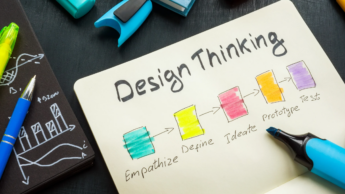
Design Thinking in complex organizations: how to get every department on board
There’s a problem that needs a fast solution. A new system, an extra feature, or an entirely new product. Many organizations jump straight into solution mode and start building right away. The result is that a lot of time and budget goes into something that doesn’t actually solve the problem. Design Thinking flips this around.…
-

Business case for innovation
Within larger organizations, innovation projects stall more often than you’d think. They start with a great idea and plenty of energy, but as soon as the risks take center stage, the project loses momentum. As a result, the team loses direction and motivation. Because the outcome of innovation is never guaranteed, it feels abstract to…
-

Product innovation vs. product optimization: when should you invest in innovation?
Anyone managing a mature product portfolio regularly faces the same choice: do we keep improving the current product step by step, or invest in an entirely new one? For SMEs and multinationals, this is a key portfolio question. Do you develop an existing platform further to maintain short-term returns, or do you take the risk…