


From your idea to a product on the market
The development process from idea to product consists of a number of steps that are completed before it ultimately reaches the market. The most important steps in this process are establishing a Program of Requirements (PoR) and generating many different ideas.
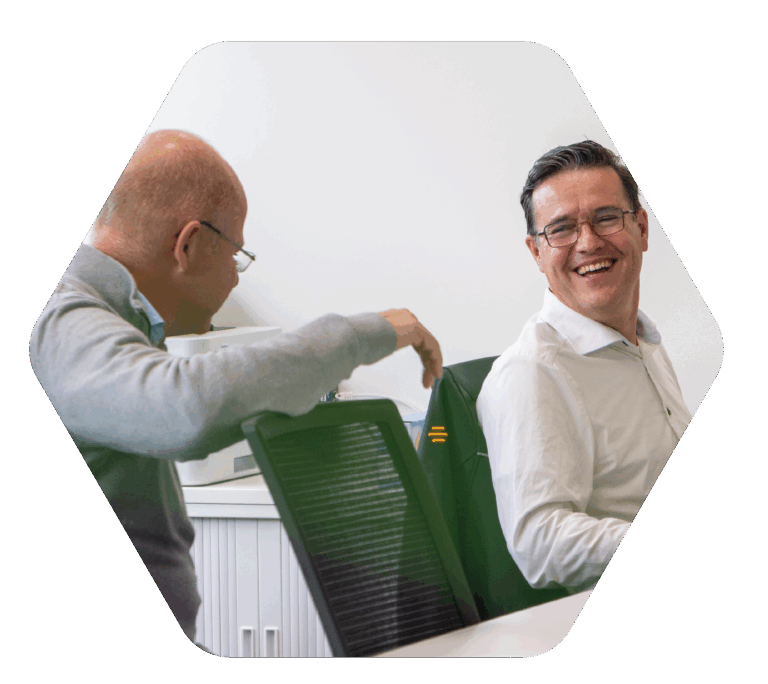
At Beeliners, we ensure you are continuously involved in this process—after all, we do it together. We achieve this through joint brainstorming sessions.
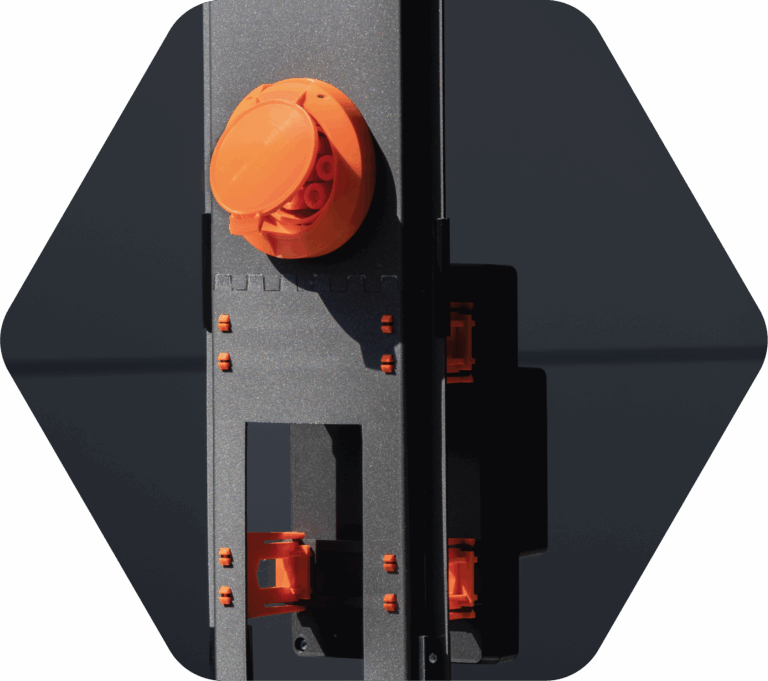
- We collaborate with you
We don’t work for you, but with you. That you way you will stay involved and can keep control over your idea. - Specialist at the ready
You will have direct contact with the specialists who work on realizing your idea. Spar directly with the right specialist. - Direct lines
Would you like adjustments to your idea? Due to the direct line of communication we can act quickly to make it happen. - The IP remains yours
The Intellectual Property (IP) is always yours. We are happy to help you take care of the paperwork.

What is the process from idea to product?
The process from idea to product revolves around generating many different ideas and then evaluating them for feasibility and profitability. Ideas are generated in brainstorms and can arise from market research, customer needs, innovations, or dedicated brainstorming sessions. The initial goal is to gather as many ideas as possible, with the principle that no idea is a bad one.
The importance of moving from idea to product
The process from idea to product is essential and helps you to develop a product in a targeted, efficient, and lower-risk manner, ensuring it truly meets the needs of the intended users. By gathering many ideas and subsequently evaluating them, you ensure that you aren’t just making something, but rather a product that people will actually want to use.
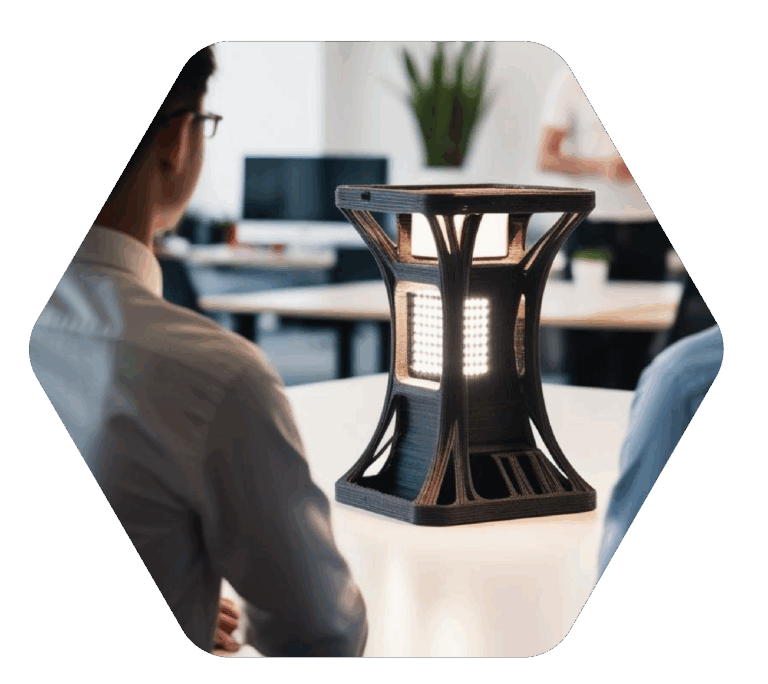
The process from idea to product
Getting from an idea to a product involves an entire process. Typically, this product development process consists of the following steps, which we will complete together:
1. Establishing a Program of Requirements (PoR): Based on the needs and problems identified during the product research phase, we can establish a Program of Requirements. This is a collection of the requirements and desires that your new product must meet. The PoR provides guidelines for your project, and we use it to justify and test ideas, concepts, and choices.
2. Generating Ideas: Once the needs and requirements have been mapped out, we can then begin to generate ideas that can solve the identified problems and needs of the market. In this phase, ideas can be generated for a new product, a new service, or an improvement to an existing product. This typically occurs through a brainstorming session.
You can conduct this brainstorm yourself, but Beeliners can also assist you with various brainstorming techniques. The added value of an external party like Beeliners is that we can function as a catalyst, facilitator, and source of inspiration in this process.
3. Evaluating Ideas: Once a number of ideas have been generated, they must be evaluated to determine if they are feasible and profitable. Factors we take into consideration here include market demand, the competition, technical feasibility, and costs. For this, our team is happy to help you conduct a product research.
Core components for getting an idea to product

A Clear Understanding of Market Needs
It is essential to have a clear insight into the needs and desires of the target audience before you begin developing your product.

A Strong Team
The process requires a multidisciplinary team of talented individuals with diverse skills, such as industrial design engineers, electrical engineers, and software engineers.

Effective Project Management
It is important to manage the process effectively to ensure that it stays on schedule and within budget. This ensures you can truly move from idea to product.

Flexibility
It is important to be flexible and to adapt to changes in market needs and the competitive landscape. For example by conducting research on how the market around your product changes.
“Together we make your idea reality.”
Do you have a product idea that you want to bring to life? Our experts are ready to develop your product and bring it to the shelves. An initial consultation is always free. Get started today!

How we help with protecting your product idea
When you want to go from an idea to a product, it’s important to think about protecting your idea with intellectual property rights. This protects your product against counterfeiting, among other things. We recommend doing this once the prototype has been fully developed. After all, you cannot protect a standalone idea.
When you choose to partner with Beeliners, the intellectual property rights remain with you. We also guide you in securing the proper rights and handling the associated paperwork. For example, we are happy to provide input on how the concepts should be described for these purposes.
Tools & techniques we apply
SWOT Analysis
A SWOT analysis can also be used during a brainstorm to qualify ideas. For example, describe how a certain idea is better than others (Strengths), what its weak points are (Weaknesses), what else is possible based on the idea (Opportunities), and what its potential disadvantages could be (Threats).
Mind Mapping
Mind mapping is a brainstorming technique where we write down a central topic and then map out all sorts of related ideas around it.
The Why Analysis
The Why Analysis, also known as the Five Whys technique, challenges you to ask “why” five times for each idea. This makes it easier for any underlying problems to surface.
Exploring the Extremes
When exploring the extremes, you take a single aspect of your objective and then magnify it or make it more extreme. By exploring the outer limits of your product concept, you can arrive at unique new ideas and insights.
From idea to product with Beeliners
Partnering with Beeliners to get from your idea to a product means that we work together with you to ensure your idea becomes a reality. We do this by using various brainstorming techniques, which allows us to continuously refine your concept.
Additionally, we ensure that you are continuously involved in the process from idea to product. Thanks to direct communication and our practical approach, you are always up-to-date on the latest progress.
Curious about what we can achieve together? Feel free to contact us for a no-obligation consultation!

6
awards for product innovation
20+
new products on the market annually
48+
companies took the Beeline
Do you have a challenge for us?
Our product developers are ready to start on your innovative ideas! Do you have an idea, a question or a challenge about product development? Our team of specialists are ready to turn your ideas into reality. Don’t hesitate and feel free to contact us. We’d love to hear from you!
Our craftsmanship
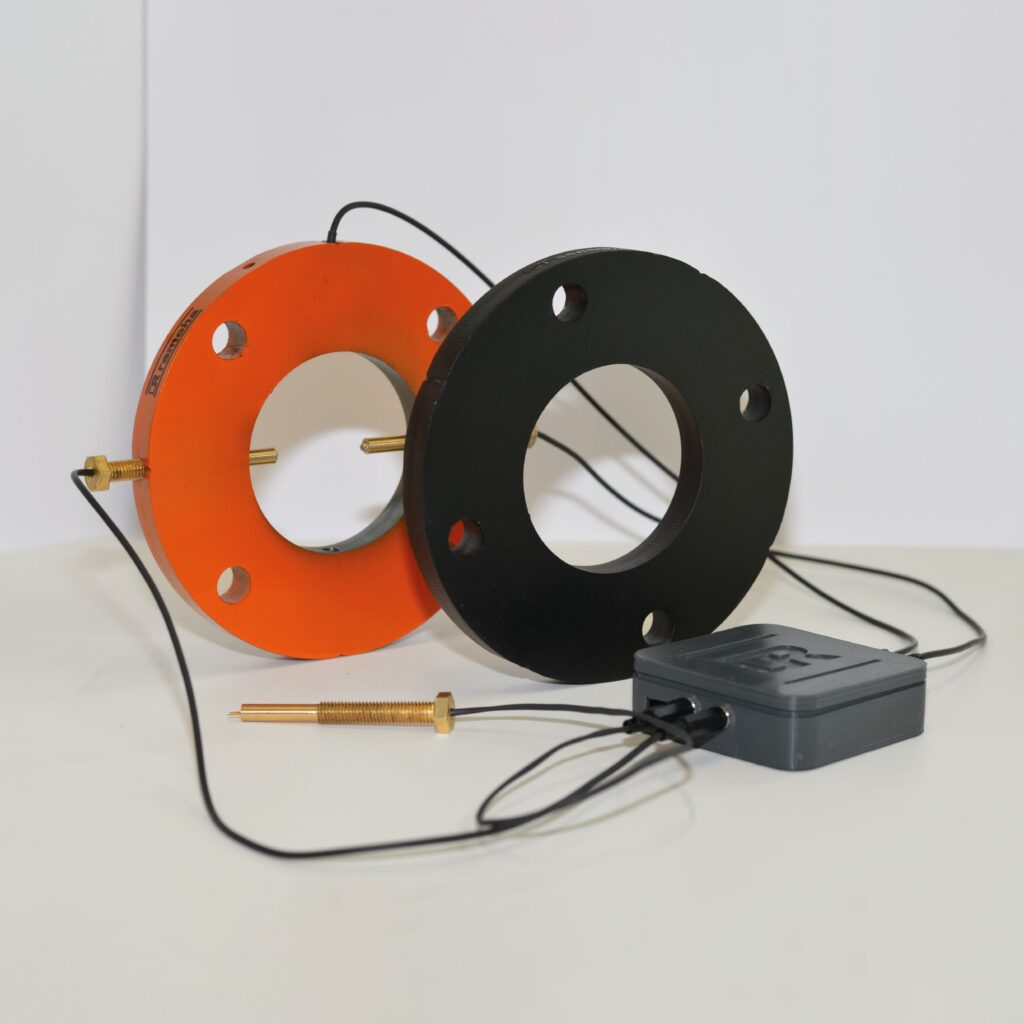
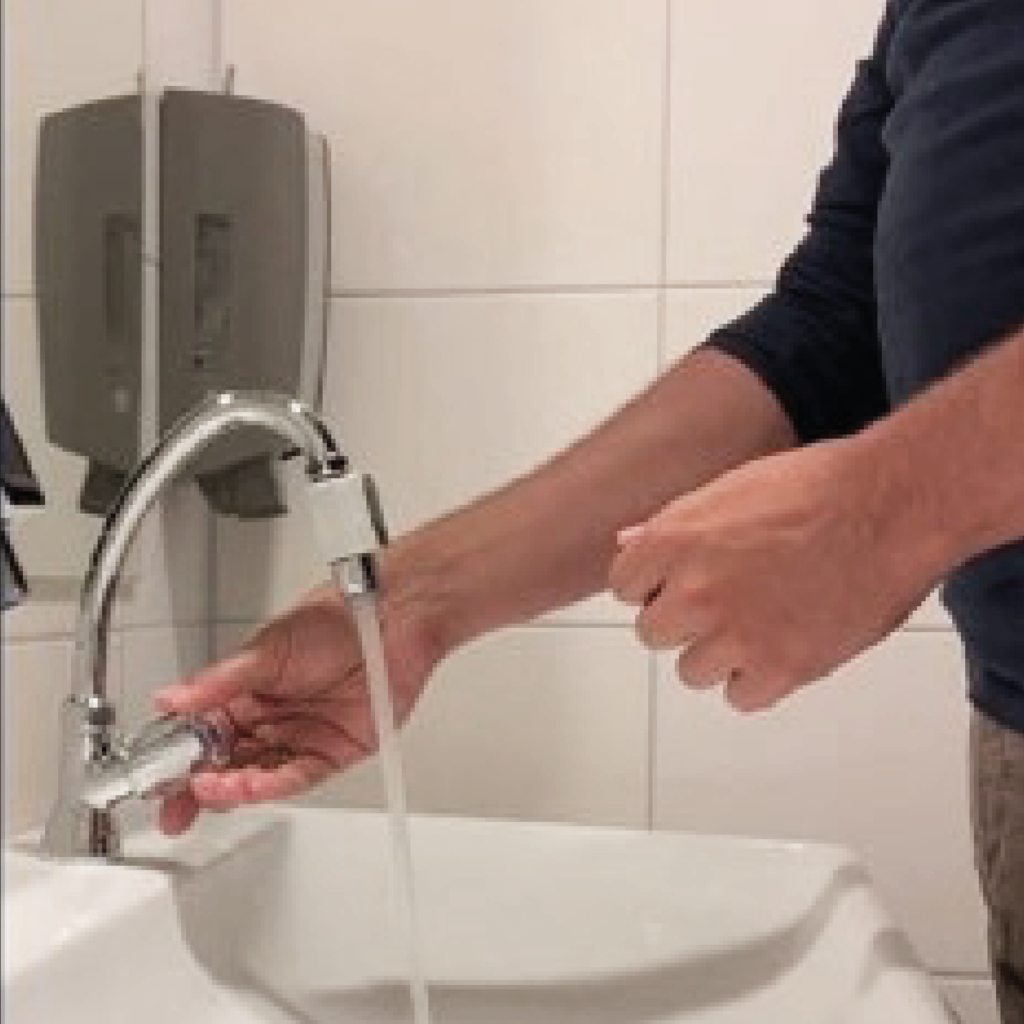
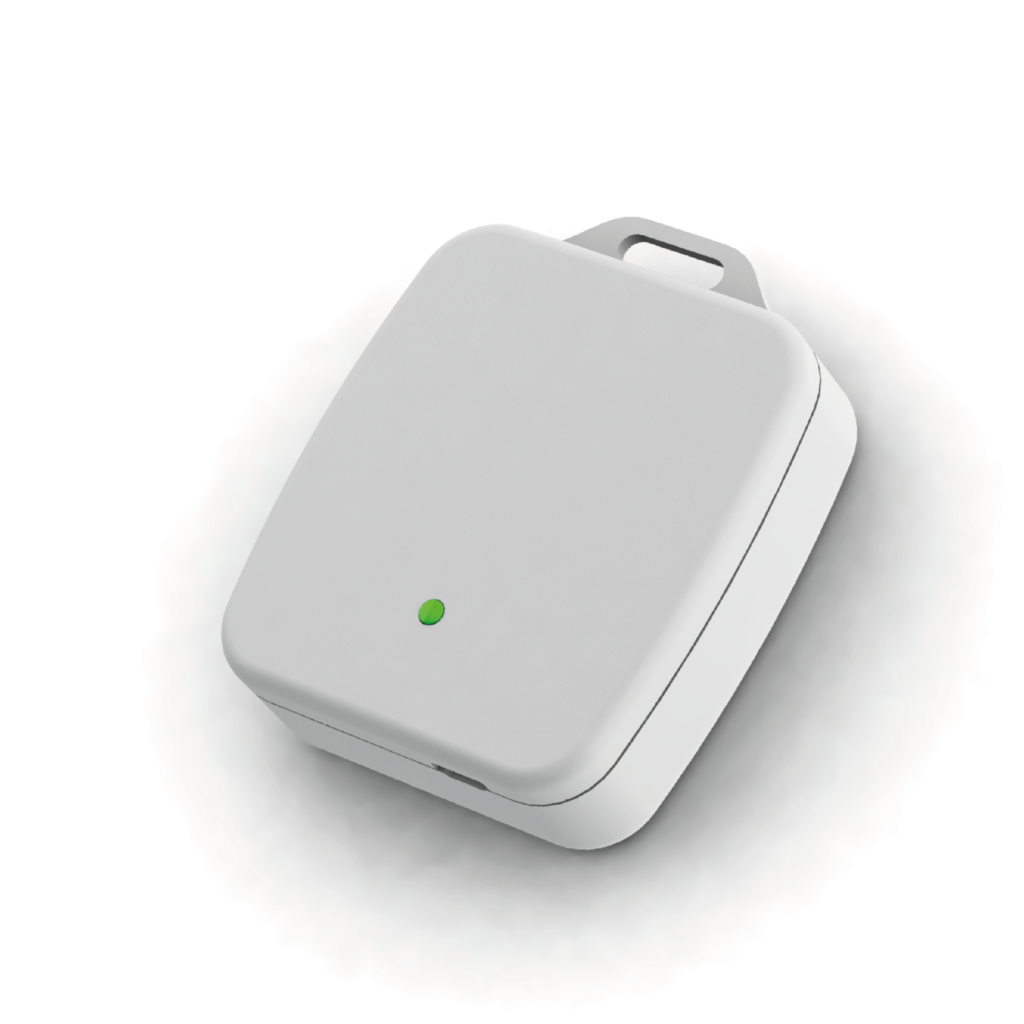
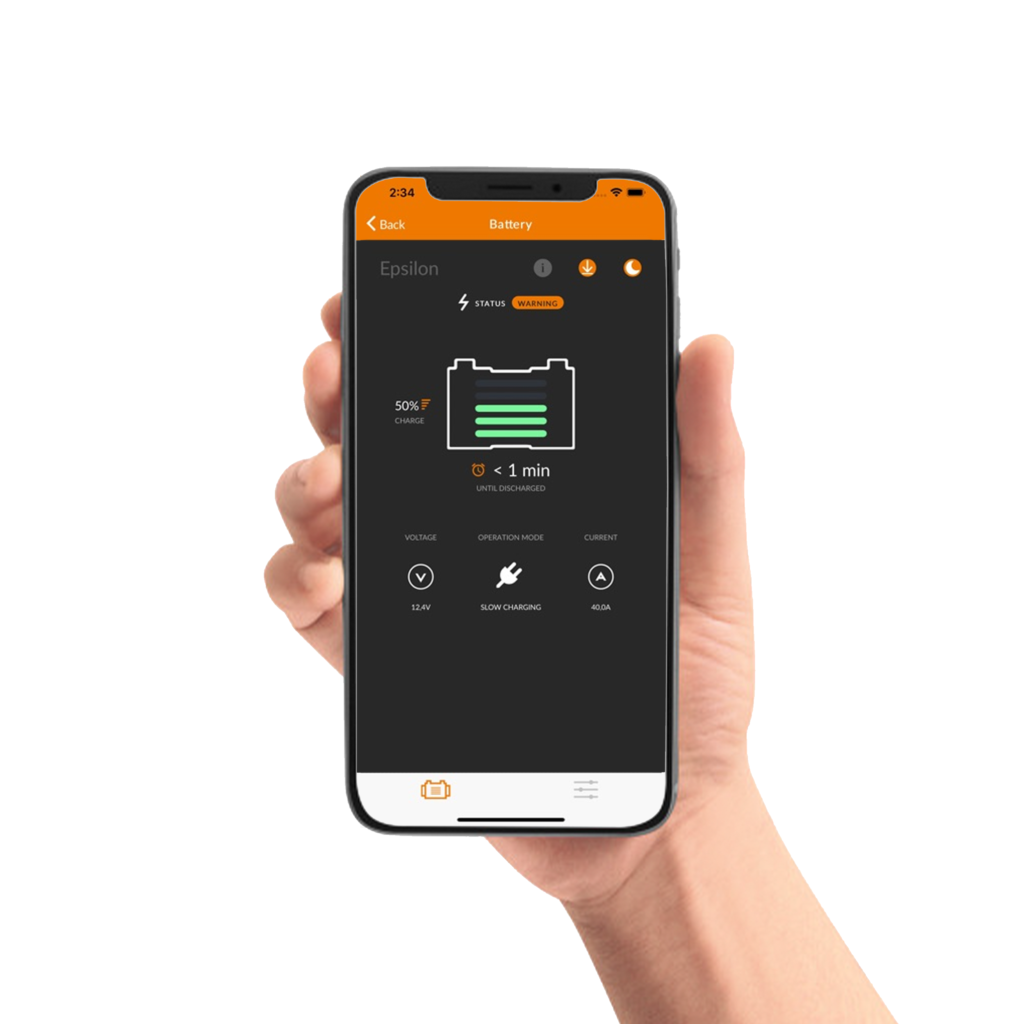
Recent projects

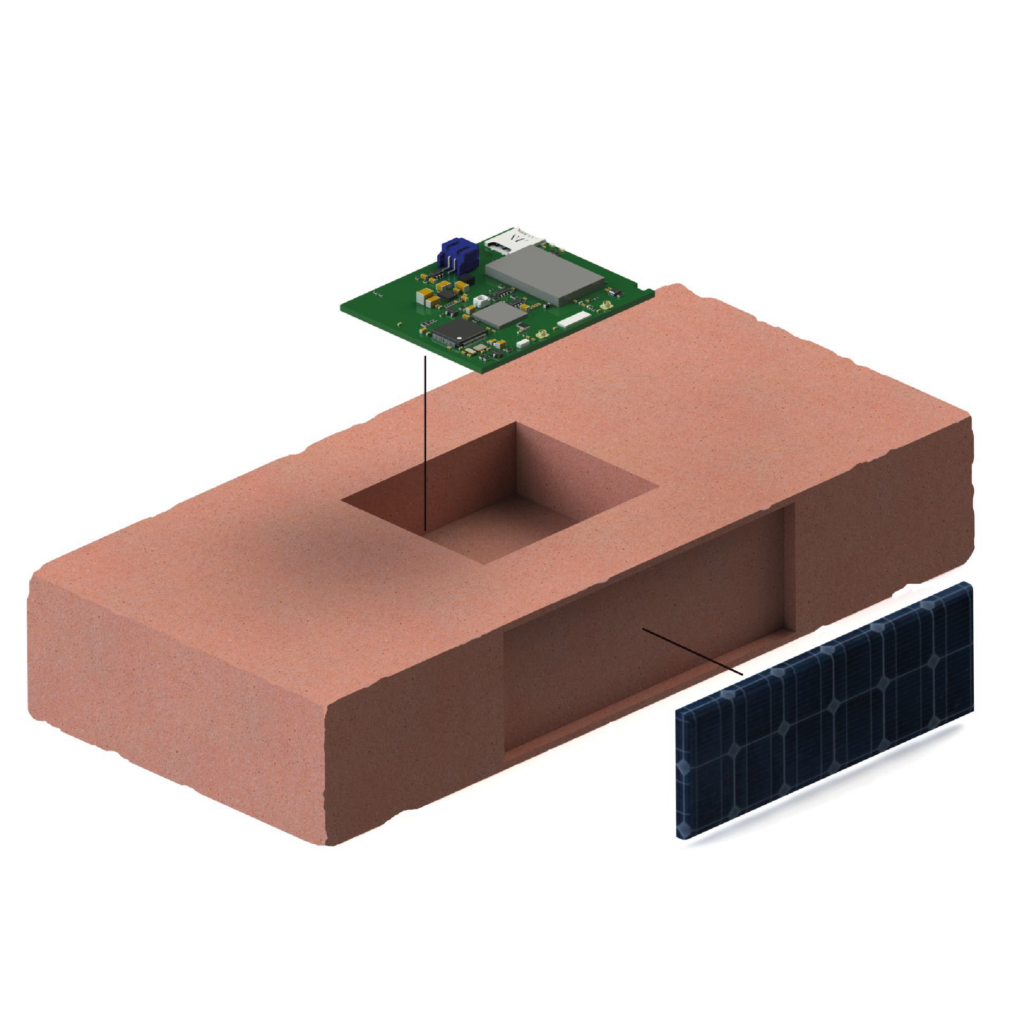
Our insights, lessons and vision on product development
-

Product innovation vs. product optimization: when should you invest in innovation?
Anyone managing a mature product portfolio regularly faces the same choice: do we keep improving the current product step by step, or invest in an entirely new one? For SMEs and multinationals, this is a key portfolio question. Do you develop an existing platform further to maintain short-term returns, or do you take the risk…
-
Circularity: why and how do you get started with it?
Imagine: a world in which we no longer produce waste. Where products are reused endlessly and companies smartly profit from sustainable models. It sounds futuristic, but the reality is that we are moving towards that faster than ever. The circular economy is not just a trend, but a necessity and an opportunity for entrepreneurs who…
-

The multidisciplinary approach of Beeliners
Many product development trajectories experience delays because disciplines only start communicating with each other at a late stage. The hardware works, but does not fit the design. The software does what it needs to do, but the controls do not feel intuitive. Or technical limitations arise that could have been prevented earlier. At Beeliners, we…